simple site templates

ENDOCANNABINOIDS

We produce these naturally

Anandamide 

Anandamide: Bliss Molecule for Happiness & Mental Balance 

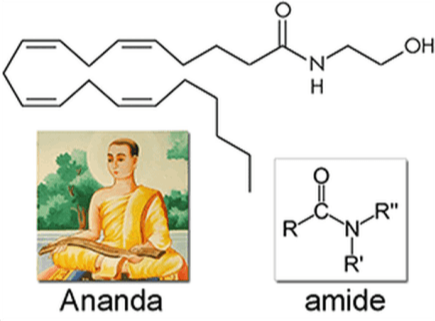
Discovered in 1992, the N-arachidonoylethanolamide or anandamide is a neurotransmitter derived from arachidonic acid, a polyunsaturated omega-6 fatty acid. Anandamide is one of the most important of the Endocannabinoids, the compounds produced within the body that bind to cannabinoid receptors in the brain and elsewhere.

Puzzled as to why there were THC receptors in the brain when the body did not naturally produce them, scientists solved the mystery when they discovered anandamide and how it binds to cannabinoid receptors. Often called the “bliss molecule” for the role it plays in producing feelings of happiness (‘Ananda' means inner bliss, happiness, pleasure, joy, delight and tranquillity in Sanskrit), Anandamide also affects overall health and mental wellbeing in numerous other ways. Anandamide works by binding to the same receptors in the brain as the main psychoactive compound in Cannabis, namely THC.  


Mobirise

The Health Benefits of Anandamide! 
After the discovery of Anandamide, scientists started looking for cannabinoid receptors and found that the human body is brimming with them! Besides residing in several regions of the brain, they are found in the central nervous system, heart, liver, spleen, pancreas, skin, white blood cells, reproductive organs, and in the gastrointestinal and urinary tracts. Anandamide assists with movement and pain control, appetite stimulation and the inhibition of cancer-producing cells.

The Mental Health Benefits of Anandamide! 
Suboptimal levels of Anandamide can cause unhappiness, increase fear and anxiety, and reduce the ability to cope with stress. The Endocannabinoid System, which includes Anandamide, offers protection against stress-related and psychiatric diseases such as depression, generalised anxiety and post-traumatic stress disorder (PTSD). Research is increasingly supporting the inhibition of fatty acid amide hydrolase (FAAH), an enzyme that breaks down Anandamide, in the treatment of anxiety disorders, traumatic stress and drug addiction.

Mobirise

2-Arachidonoylglycerol 

Mobirise

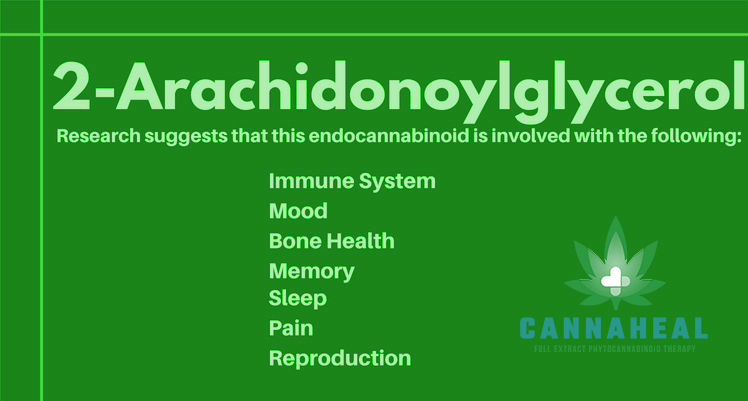
While Anandamide and 2‑arachidonoylglycerol interact with each other to regulate certain processes, it is 2‑arachidonoylglycerol that is believed to regulate the transmission of signals across synapses in the brain. Growing evidence shows that 2-AG is involved in the pathogenesis of various shocks and atherosclerosis. It is also responsible for regulating food intake and energy metabolism, and modulating anxiety and depression. In addition, 2-arachidonoylglycerol is a proven mediator of inflammatory reactions and immune responses, and it can reduce pain.

In immune cells such as platelets and macrophages, the 2-AG lipid is produced in response to injury and inflammation. Researchers have found that it suppresses cyclooxygenase(COX)-2, a key enzyme in prostanoid biosynthesis. It can improve neurodegenerative diseases and there is a growing belief that it can counter systemic lupus erythematosus. Most recently, research has shown that it can inhibit the growth and metastasis of certain cancer cells, with concentrations in the primary tumour and plasma. The thinking is that activates immune cells, which then via the CB2 receptor trigger a phenotypic switch from aggressive to tumour-tolerant cells. It is also being used to treat cardiovascular disease and to aid human reproduction (Source: http://www.lipidhome.co.uk)


© Cannaheal PTY LTD (2018/376454/07) - 2019 All Rights Reserved


THIS MEDICINE HAS NOT BEEN EVALUATED BY THE MCC.
THIS MEDICINE IS NOT INTENDED TO DIAGNOSE OR PREVENT ANY DISEASE