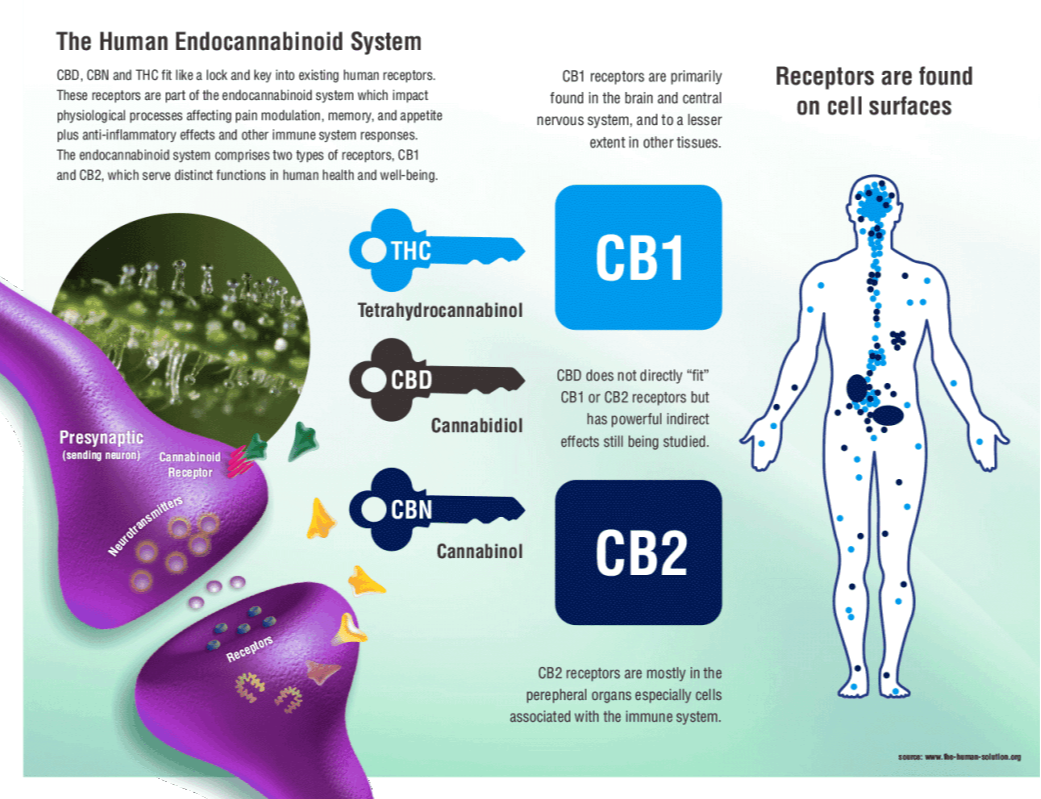
Cannabinoid Receptor 1 (CB1) - are primarily located on nerve cells in the brain, spinal cord and central nervous system. They are also found in peripheral organs and tissues such as the lungs, liver, kidneys, spleen, white blood cells, endocrine glands and parts of the reproductive, gastrointestinal and urinary tracts.
In the brain, CB1 receptors are abundant in the cerebellum, basal ganglia, hippocampus and dorsal-primary afferent spinal cord regions. That’s why cannabinoids are effective for memory processing, pain regulation and motor control. In the brain stem, the concentration of cannabinoids is low, which may be why Cannabis use is not associated with sudden death resulting from depressed respiration, as is the case with heroin overdoses - no one in the history of Cannabis usage has ever died from an overdose.
Our natural Endocannabinoids and Phytocannabinoids such as THC bind with CB1 receptors as a result of their similar molecular structure. This gives patients relief from pain, nausea and depression, bringing in better sleep among other conditions.
CB1 receptors are activated by the Endocannabinoid neurotransmitters anandamide and 2arachidonoylglycerol, and by plant-based cannabinoids such as THC.
Stimulation of the CB1 receptor results in people getting high. It also promotes increased appetite, mood elevation, stimulation of thought and creativity, enhanced sensory sensitivity, better pain management, better movement coordination and fertility.
Cannabinoid Receptor 2 (CB2) – receptors are found mainly in the immune system, with a heavy concentration in the spleen and the gastrointestinal system. In the immune system, one important function of the cannabinoid receptors is the regulation of cytokine release. The presence of CB2 receptor on macrophage cells is indicative of its ability to bring the cannabinoid compound to the site to assist in fighting disease, reducing inflammation and alleviating pain. Selective CB2 receptor agonists are accordingly becoming increasingly popular subjects of research as a result of their potential anti-inflammatory and anti-cancer effects.
Cannabinoids and their receptors are essentially like locks and keys. Only keys specific to a lock will open that lock, which is why Cannabinoids are often referred to as the ‘KEY’, and the CB1 / CB2 receptors as the ‘LOCKS’. When you take Cannabis oil, the Phytocannabinoids (keys) search the body for their locks.
Research has also revealed that the Endocannabinoid System uses “backward” communication. It’s this type of communication that reduces